
If your crosshair feels shaky, your flicks keep overshooting, or your micro-adjustments feel inconsistent from one session to the next, the problem might not be your mouse. For many FPS players, the real bottleneck is the mousepad. A good FPS mousepad creates predictable glide, reliable stopping power, and stable tracking. A bad one makes the same mouse feel unstable, muddy, or too fast to control. That is why serious players searching for the best mousepad for FPS are usually trying to solve one urgent problem: they want more consistent aim, not just a new accessory.
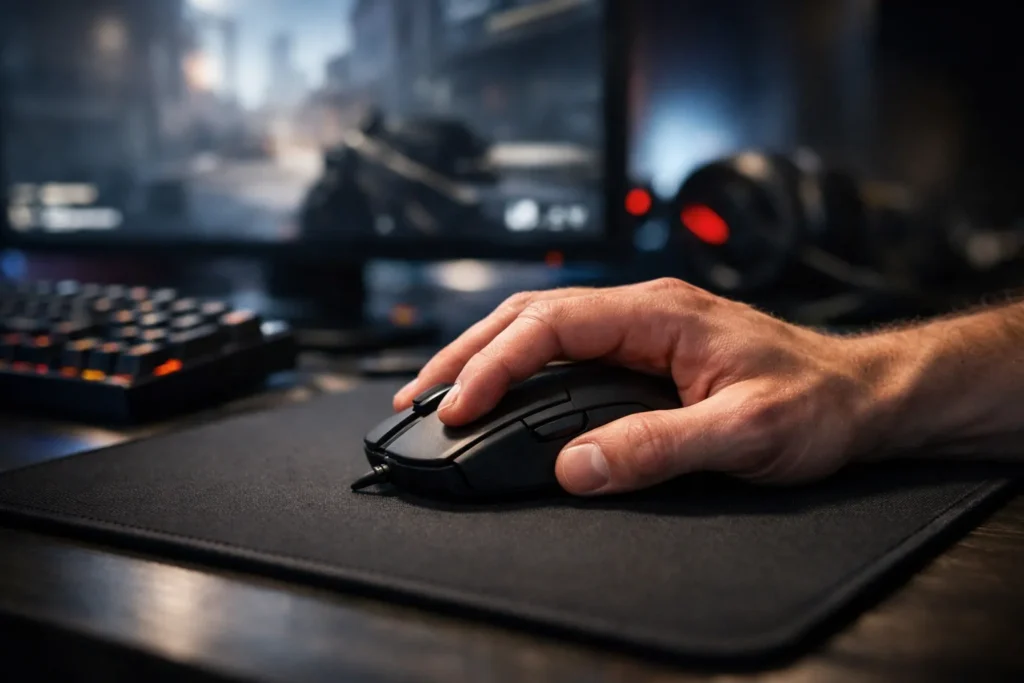
The buying intent behind this keyword is highly commercial, but it is also performance-driven. Readers do not just want a list of products. They want to know which surface helps flick shots, which pad offers better stopping power for tactical shooters, and whether a faster pad will actually improve tracking in games like Valorant, CS2, or Apex Legends. In other words, they are ready to buy, but only after they understand how the pad will affect real in-game aim.
The Fast Truth: The Best FPS Mousepad Is the One That Matches Your Aim Style
A lot of gamers make the same mistake: they assume faster always means better. It does not. Hard pads and ultra-fast surfaces reduce friction and can feel amazing for rapid flicks, but they also demand better stopping mechanics. Cloth control pads slow you down slightly, yet they often make crosshair placement more repeatable under pressure. SteelSeries now sells distinct Speed, Balance, and Control surfaces in its QcK Performance line, which reflects how much player preference matters even within one premium series.
If you play low sensitivity and rely on arm aiming, you usually benefit from a larger cloth pad with enough control to stop cleanly after long swipes. If you play higher sensitivity and use more wrist movement, a faster or hybrid surface can feel more responsive. The key is not picking the “best” pad in the abstract. It is choosing the pad that reduces your own aiming errors.
Why Mousepad Friction Changes Your Aim More Than Most Players Realize
In FPS games, aim starts before the flick. It starts with breakaway force: how much effort it takes to move the mouse from a dead stop. That is static friction. Then comes dynamic friction: how much resistance you feel once the mouse is already moving. If static friction is too high, micro-corrections can feel sticky. If dynamic friction is too low, you may overshoot your target when pressure spikes in a duel.
SteelSeries describes its Speed surface as “ultra-low dynamic friction,” while its Control surface adds drag for more granular movement. Logitech describes the G440 hard pad as ultra-low friction for high-speed movement and subtle gestures. Those are not marketing details to ignore. They directly map to how easy it is to start, sustain, and stop movement in game.
Attack Shark’s recent technical guide explains why this matters even more with modern high-polling-rate gear. At 800 DPI, roughly 10 inches per second of movement is needed to saturate an 8000 Hz stream; at 1600 DPI, about 5 IPS is enough. Their point is simple: if the surface introduces inconsistent “stiction” at the start of movement, early tracking data can become less clean during tiny corrections. That matters most to players who care about micro-precision.
Cloth vs Hard vs Hybrid: What Actually Works for FPS in 2026
Cloth pads are still the safest recommendation for most FPS players. They offer a forgiving feel, strong control, and better stopping power under pressure. Razer says the Gigantus V2 uses a textured micro-weave cloth surface optimized across mouse sensors for precise tracking, and it offers sizes up to 3XL for low-sensitivity players who need room for large swipes. That combination of surface stability and space is why cloth remains dominant in tactical shooters.
Hard pads are the speed specialists. Logitech’s G440 is a classic example: a rigid hard surface, 340 x 280 mm footprint, 3 mm thickness, and a low-friction polyethylene top designed for fast, fluid movement. The trade-off is obvious. You get rapid glide and fast directional changes, but less built-in control and a smaller error margin when stopping on target.
Hybrid pads sit in the middle. Their goal is to reduce the sticky feeling of traditional cloth without becoming uncontrollably slick. That is why hybrid surfaces are gaining attention among competitive players who want a more unified glide profile. For players who feel cloth is too slow and hard pads are too punishing, hybrid is often the smartest upgrade path.
Size Still Matters More Than Most Review Lists Admit
Many mousepad roundups focus on material first, but size can be just as important. Razer’s official Gigantus V2 dimensions show how wide the range has become: 360 x 275 mm for Medium, 450 x 400 mm for Large, 940 x 410 mm for XXL, and 1200 x 550 mm for 3XL. If you use low sensitivity, a small pad can force lift-offs, break rhythm, and add inconsistency to your tracking.
Thickness also affects feel. SteelSeries lists a 3.5 mm thick base on QcK Performance Speed, and Razer highlights 3 mm to 4 mm thickness on Gigantus V2 depending on size. Thicker pads usually feel more cushioned and more forgiving on imperfect desks, while thinner pads feel a little firmer and more direct. Neither is universally better, but tactile preference can absolutely influence consistency over long sessions.
What the Best Current Sources Agree On
Across current buying guides and reviews, one pattern shows up again and again: most players are best served by a controlled cloth or balanced cloth surface, not by the absolute fastest option. PCGamesN’s current guide names the SteelSeries QcK as the best overall gaming mousepad and positions QcK Performance as a strong control-focused option with three distinct surface choices. PC Gamer’s 2026 guide also puts SteelSeries QcK Performance at the top overall, praising its build and surface variety.
That does not mean hard pads are bad. It means they are more specialized. If you are already mechanically clean and want maximum speed, a hard or even glass surface can unlock faster flicks and effortless micro-tracking. But for the average FPS player trying to reduce inconsistency, a balanced or control-leaning cloth pad is still the better first recommendation.
Quick Comparison Table for Retail Readers
| Mousepad Type | Glide Feel | Stopping Power | Best For | Main Trade-Off |
|---|---|---|---|---|
| Control Cloth | Medium-slow | High | Valorant, CS2, tactical FPS | Can feel muddy if you prefer speed |
| Balanced Cloth | Medium | Medium-high | Most FPS players | Less specialized |
| Speed Cloth / Hybrid | Medium-fast | Medium | Apex, COD, all-round competitive play | Slightly less forgiving |
| Hard Pad | Fast | Low-medium | High-sens players, aggressive flickers | Harder to stop cleanly |
| Glass Pad | Very fast | Low | Highly refined aimers who want max glide | Learning curve, skate wear concerns |
My Practical Recommendation by Player Type
If you mostly play Valorant or CS2 and care more about first-bullet accuracy than flashy speed, buy a control cloth or balanced cloth pad. That is the safest choice for most players who want more stable aim immediately. The current QcK Performance line is one of the clearest examples because it separates Speed, Balance, and Control instead of forcing you into one texture.
If you play Apex Legends, Call of Duty, or fast hero shooters and like reactive wrist aiming, a speed cloth, hybrid, or hard pad may feel better. Logitech’s G440 remains relevant precisely because its low-friction hard surface supports rapid gestures and quick transitions.
If you use low sensitivity and frequently run out of space, prioritize size before anything else. A 940 mm or 1200 mm desk mat can improve comfort and consistency more than changing from one mid-range cloth surface to another.
The Best Mousepad for FPS in 2026
For most readers, the best overall answer is still a premium cloth pad with a clearly defined speed or control profile. That is why the safest retail recommendation is a quality line like SteelSeries QcK Performance, especially for buyers who want to choose between Control, Balance, and Speed without changing brand ecosystem. If you want a budget hard pad, Logitech G440 remains a strong value choice. If you need sheer size and proven cloth consistency, Razer Gigantus V2 is still one of the easiest recommendations to make.
The real fix for your aim is not magic. It is friction that matches your hand speed, size that matches your sensitivity, and a surface you can trust every single round. Buy for consistency, not hype, and your aim will usually improve faster than expected.
